

Many readers have been surprised to discover recently that the popular Norton 360 Antivirus suites now come with a program that lets customers make money by mining virtual currency. But Norton 360 isn’t alone in this dubious effort: Avira Antivirus software — which has built a global user base of 500 million primarily by offering products for free — was recently acquired by the same company that owns Norton 360, and is introducing its customers to a program called Avira cryptocurrency.
Avira cryptocurrency
Founded in 2006, Avira Operations GmbH & Co. KG is a German multinational software company known for its Avira Free Security (aka Avira Free Antivirus). In January 2021, Avira was acquired by Tempe, Arizona NortonLifeLock Company., the same company that now owns Norton 360.
Identity Theft Company of the Year 2017 life lock acquired Symantec Corporation, which was renamed NortonLifeLock in 2019. LifeLock is now included with Norton 360 services; Avira offers users a similar service called Breach Monitor.
Like Norton 360, Avira already has a crypto miner installed, but customers must choose to use the service that powers it. Avira’s Frequently Asked Questions About Its Cryptocurrency Services A bit sparse. For example, it does not specify how much NortonLifeLock gets from the transaction (NortonLifeLock keeps 15% of any cryptocurrency mined by Norton Crypto).
“Avira Crypto allows you to use your computer’s spare time to mine the cryptocurrency Ethereum (ETH),” the FAQ explains. “As cryptocurrency mining requires a high level of processing power, it is not suitable for users with ordinary computers. Even with compatible hardware, the rewards for mining cryptocurrency yourself may be reduced. Your best bet is to join a shared computer power to increase their chances of mining cryptocurrency. The rewards will then be distributed equally to all members of the pool.”
NortonLifeLock has not responded to a request for comment, so it’s unclear whether Avira uses the same encryption code as Norton Crypto. But there are signs that this is indeed the case. NortonLifeLock Avira Crypto announced in late October 2021, but as early as September 9, 2021, multiple other antivirus products have flagged Avira’s installer as malicious or unsafe because it contains cryptominers.
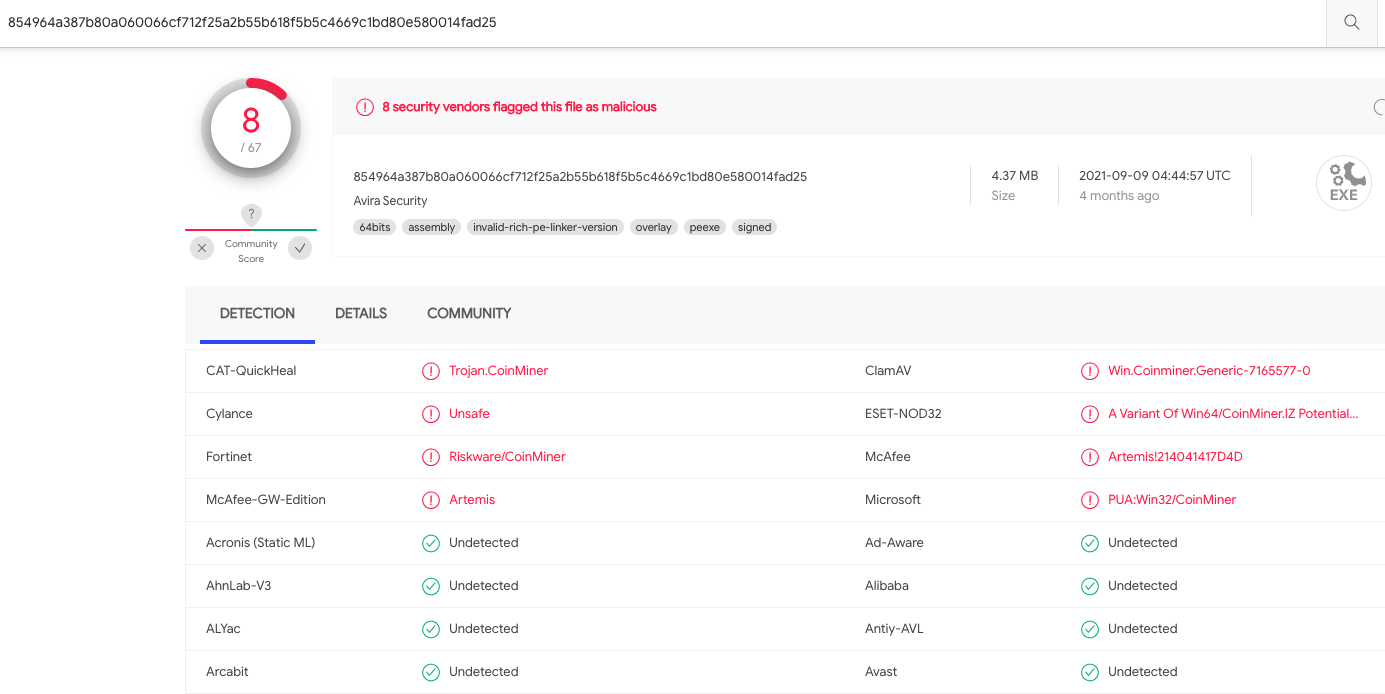
As early as September 2021, Avira was detected as potentially unsafe to contain crypto miners. Image: Virustotal.com.
The screenshot above is in Virustotal.com, a Google-owned service that scans submitted files against dozens of antivirus products. The detection report in the picture was found by searching Virustotal for “ANvOptimusEnablementCuda”, which is included in the Norton Crypto mining component “Ncrypt.exe”.
Some longtime Norton customers have expressed fear on NortonLifeLock’s online forum about the prospect of their antivirus products installing coin mining software, whether or not the mining service is turned off by default.
“Norton should have detected and neutralized crypto mining hijacks, not installed their own,” a Dec. 28 thread on Norton Forums titled “Absolute Fury” read.
Others have charged that crypto products will end up costing customers more on their electricity bills than they hope to gain from letting their antivirus software mine ETH. What’s more, transferring any ETH mined by Norton or Avira Crypto to an account that users can cash out incurs high fees, and many users apparently don’t understand that they have to at least earn enough ETH to cash out to pay the fees.
NortonLifeLock, August 2021 said an agreement had been reached get Avast, another longtime free antivirus product, also claims to have around 500 million users. Whether Avast Crypto will be NortonLifeLock’s next great product remains to be seen.
As mentioned in this week’s story on Norton Crypto, I understand that participating in these crypto mining programs is voluntary, but a lot depends on how these crypto programs are delivered and whether users actually understand them when they enable them doing what. But what annoys me the most is that they will introduce hundreds of millions of internet users who may not know very well into the world of cryptocurrencies, which presents a unique set of security and privacy challenges, and it is quite important for users to “upgrade” their personal security practices The way.


